Active elimination vs. passive decay
A conventional H13 filter is a trap — it holds pathogens until they naturally break down — roughly 4 hours 23 minutes for the organisms in our own testing. During that time they remain viable. AIRE adds active sterilisation so captured organisms are destroyed in real time.
Natural decay only. Trapped viruses and bacteria stay alive in the filter and degrade slowly over hours to days.
Over 99.99% of E. coli, Staphylococcus albus and Influenza A eliminated within the hour, then continuously.
The mechanism runs in three stages — adhesion, penetration, then oxidative damage — and our chamber testing measured it against E. coli, Staphylococcus albus and Influenza A.
The 7-layer multi-prong stack
Each layer is tuned to a specific class of threat, so nothing slips through the one before it.
Aluminium alloy pre-filter
A dense multi-layer mesh that captures dust, dandruff, pollen and other large particles.
Cold catalyst filter
Decomposes harmful gases with oxygen in the air, converting them to water and carbon dioxide.
Cellular activated carbon
Breaks down formaldehyde and other harmful gases into non-toxic vapours.
Antibacterial filter
Non-woven fabric that suppresses the metabolism of microbes and is potent against mites and bacteria.
H13 medical-grade HEPA
99.95% efficient down to 0.1 micron — blocks PM2.5, allergens and volatile organic compounds.
UV-C sterilisation
Antibacterial UVA/UV-C light breaks down the DNA strands of bacteria and viruses held in the filter.
Anion release
Generates negative ions that boost antimicrobial activity and help freshen the air.
Copper & silver ion antibacterial technology
The most innovative layer. Copper and silver ions attack pathogens through isolation and sterilisation. In our own chamber testing, this stage worked alongside H13 filtration and UV-C to eliminate more than 99.99% of E. coli, Staphylococcus albus and Influenza A within 60 minutes.
- Adhesion — ions bind to the pathogen surface.
- Penetration — the cell membrane is breached.
- Oxidative damage — the organism is destroyed, not stored.
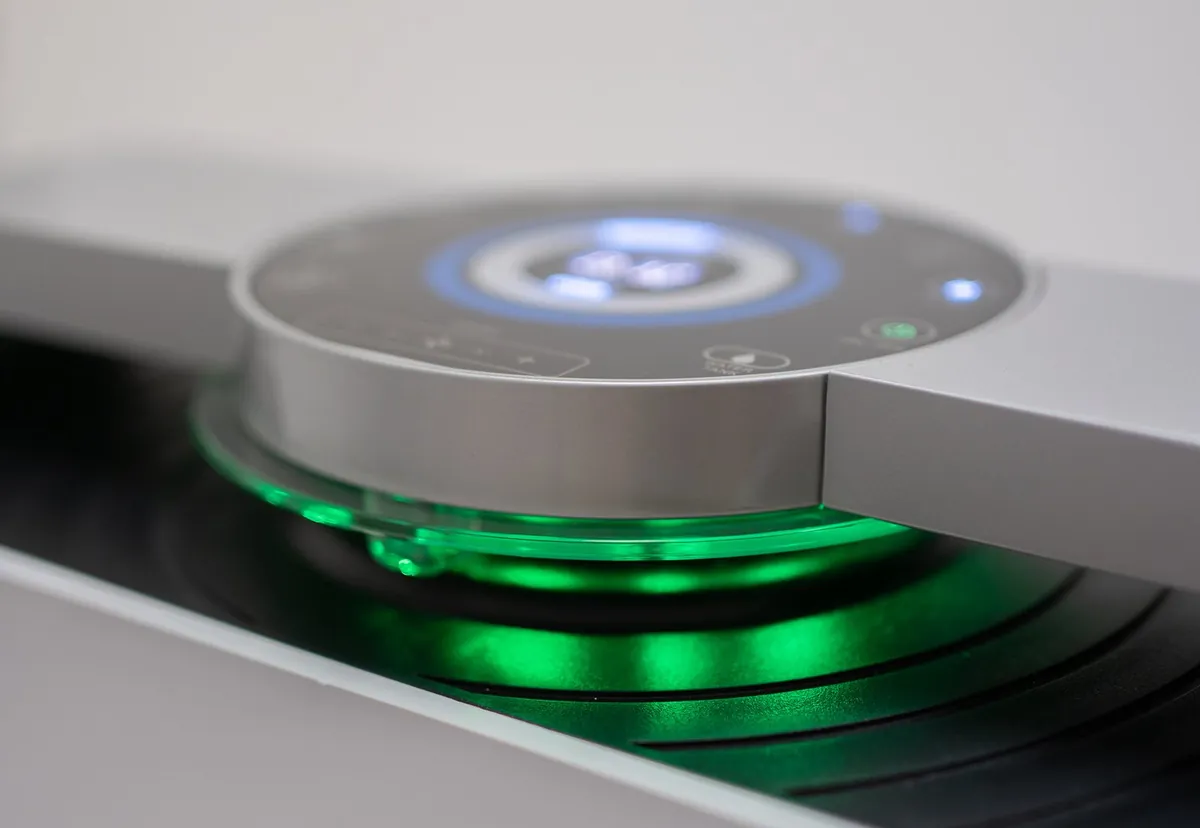
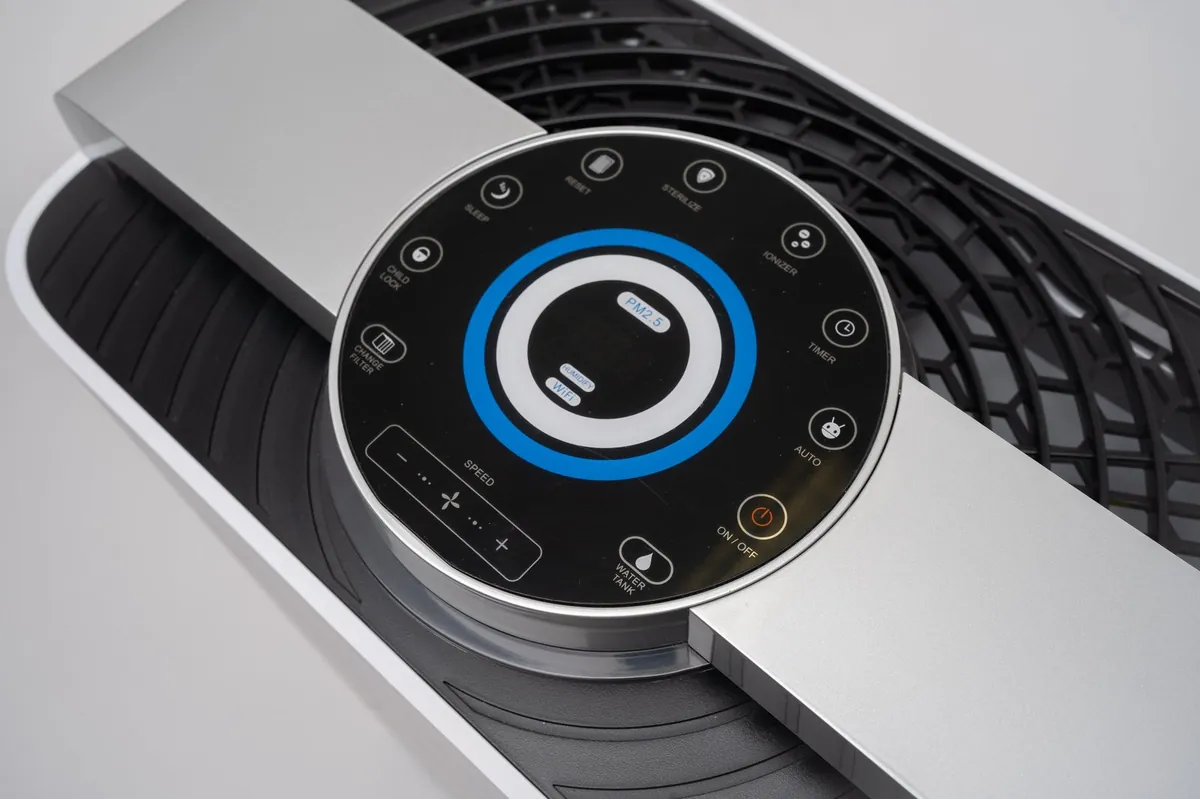
Every function, one clear dial
A real-time PM2.5 reading sits at the centre, ringed by one-touch controls — so anyone can run the room at the right setting without a manual.
- Live air-quality readout — the PM2.5 figure updates as the room clears.
- One-touch sterilise & ioniser — activate active purification on demand.
- Auto, sleep, timer & child lock — plus WiFi and a filter-change reminder.
Certified for medical environments
AIRE technology carries the certifications required where air quality is not optional.